The Danish painter Asger Jorn (1914–1973)) became, in the years following the Second World War, one of Europe's most influential artists. Today he is considered by many to be the most important Scandinavian artist, surpassed only by Edvard Munch. Jorn participated in the founding of the international group CoBrA in 1948 and was quickly recognised by collectors and museums.
A few years later his future changed radically. In the autumn of 1953 Jorn’s life and career were in ruins. In 1951 he had been struck down by tuberculosis and the network of contacts he had carefully built up throughout Europe seemed to be severed. Moreover, he had a large family to support and interest in his art was limited. However, in November he came into contact with a group of young Italian artists from the Nuclear Movement, including Enrico Baj and Sergio Dangelo. After having to choose between settling in Italy or in France, his new friends advised him on the small coastal town of Albissola. He moved there at the end of March 1954 and, by June already, he held his first solo exhibition. The exhibition took place in a gallery in Rome and its reception allowed him to look to the future again. He sold paintings and saw that he had an audience in Italy. In the very same month he took part in another exhibition in Rome, where he exhibited alongside leading American abstract expressionists. This first encounter with Sam Francis and Jackson Pollock It was decisive for him as an artist. Jorn’s attitude, which was both strongly critical and enthusiastic towards them, influenced his artistic profile and contributed to his subsequent great international success.
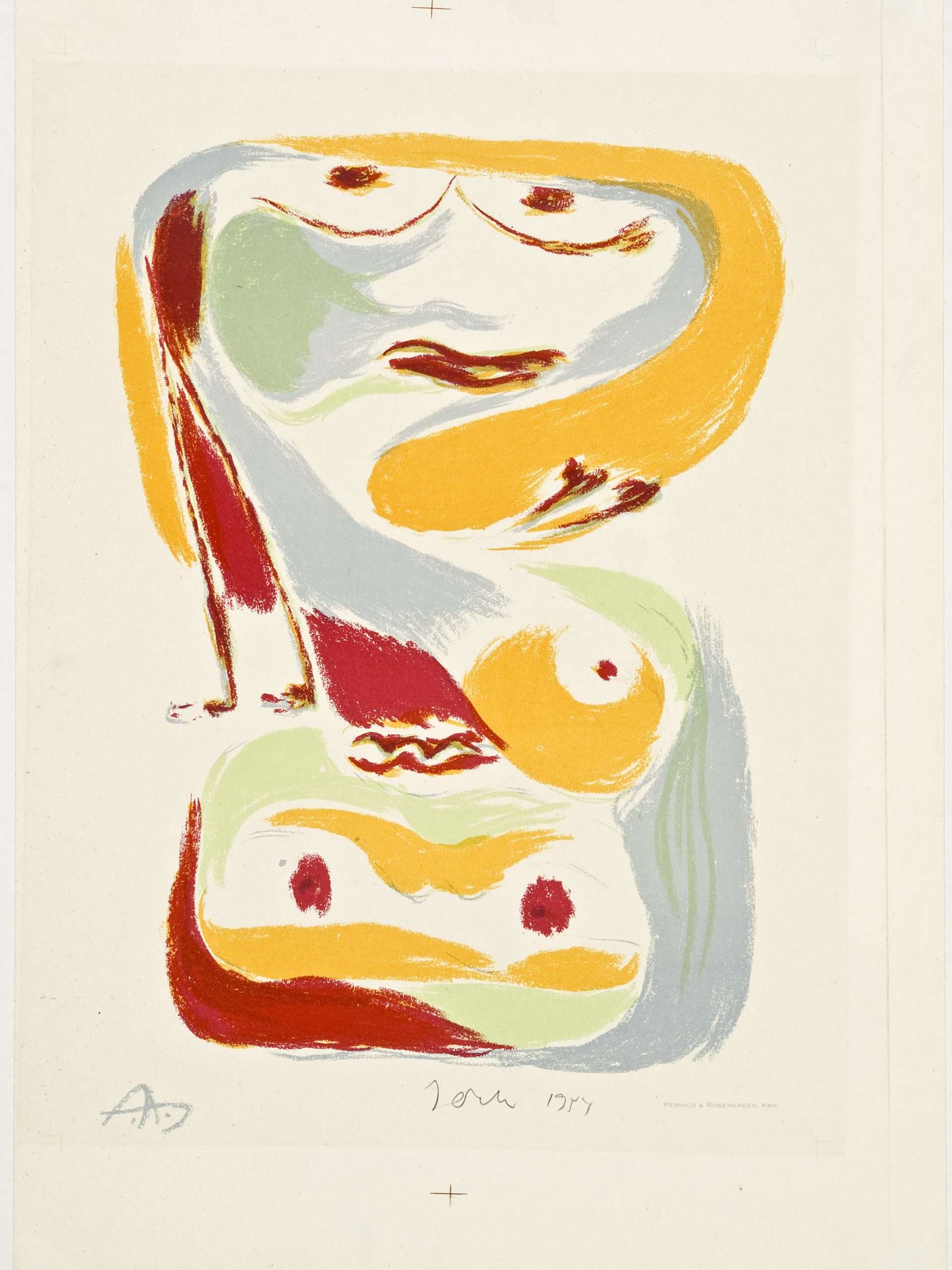
The exhibition tells the story of the Danish artist's exhibitions in Rome through 21 engravings, screenprints and lithographs, as well as archives that were created just before this first experience of his in Italy.
To mark the exhibition, the Danish Academy has published a book written by Jacob Thage that sheds light on Jorn's early years in Italy thanks to a series of new discoveries in the Roman archives.
The exhibition was curated by Jacob Thage, and the works were lent by Museum Jorn.
View timetables and buy tickets
In the years after World II, the Danish painter Asger Jorn (1914–73) became one of Europe’s leading artists. Today many consider him Scandinavia’s most significant artist, surpassed only by Edvard Munch. Jorn helped found the international CoBrA group in 1948 and was actively building a reputation among collectors and museums.
A few years later, his future took a different turn. In the autumn of 1953, Jorn’s life and career lay in ruins. He had been struck by tuberculosis in 1951, and the network he had painstakingly built across Europe seemed to have been cut off. At the same time he had to support a large family, and interest in his art was limited. But in November he came into contact with a group of young Italian artists from the Movimento Nucleare, including Enrico Baj and Sergio Dangelo. After facing the choice of settling in Italy or France, his new friends recommended the small coastal town of Albissola. He moved there at the end of March 1954, and by June he already had his first solo exhibition. It took place in a gallery in Rome, and the reception there allowed him to look forward again. He sold paintings and saw that he had an audience in Italy. Later in June he participated in another exhibition in Rome, where his art was displayed alongside the leading American abstract expressionists. This first encounter with Sam Francis and Jackson Pollock was also decisive for him as an artist. Jorn’s both strongly critical yet enthusiastic attitude towards them influenced his own artistic profile and contributed to his subsequent great international success.
The exhibition tells the story of the Danish artist’s shows in Rome through 21 woodcuts, engravings, lithographs, and archival materials that were created just before and during his early period in Italy.
On the occasion of the exhibition, the Danish Institute has published a book written by Jacob Thage that illuminates Jorn’s early years in Italy through a series of newly discovered findings in Roman archives.
The exhibition has been curated by Jacob Thage and the works have been loaned by Museum Jorn.